
BLOG
How to check your posture at home: a wall check, photos or a posture app
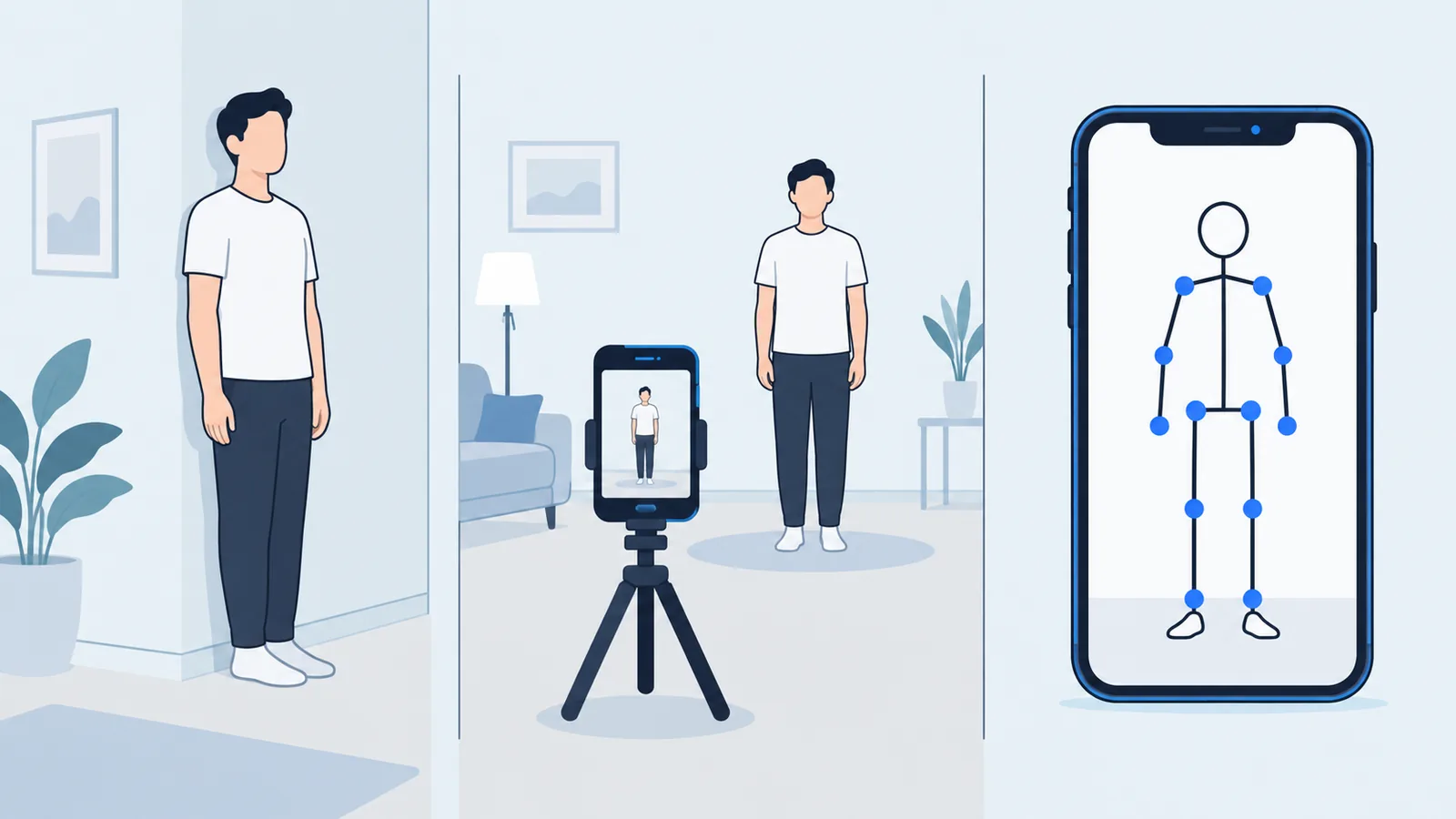
To check your posture at home, take one front and one side photo standing the way you usually do, with your phone propped level about 2.5 to 3 metres away, and look at the photos against straight lines or measure them with a posture app. A one-minute wall check needs no phone but leaves no record. Photos also catch what you cannot feel: in studies, people changed their posture as soon as they were asked to stand or sit "well".
Which method to use
Pick the method by what you want from the check.
| Method | Time | What you get | Main limit |
|---|---|---|---|
| Wall check | 1 minute | A feel for where your head and shoulders sit | No record, no numbers, affected by body shape |
| Photos reviewed by eye | About 20 minutes the first time | Front and side photos you can compare later | Judging by eye is inconsistent |
| Posture app | A few minutes once you have the photos | Landmarks and angle and percentage measurements, often a report | Estimates that depend on photo quality |
The wall check (no phone needed)
The wall check is a quick way to notice how you usually hold your head and shoulders. It is a self-awareness exercise, not a measurement.
- Stand with your heels a few centimetres from a wall, feet hip-width apart.
- Let your bottom and upper back touch the wall lightly, and stand as you normally would.
- Notice whether the back of your head touches the wall without you tipping your chin up, and whether your shoulders rest against the wall or sit forward of it.
- Step away and compare that position with how you usually stand.
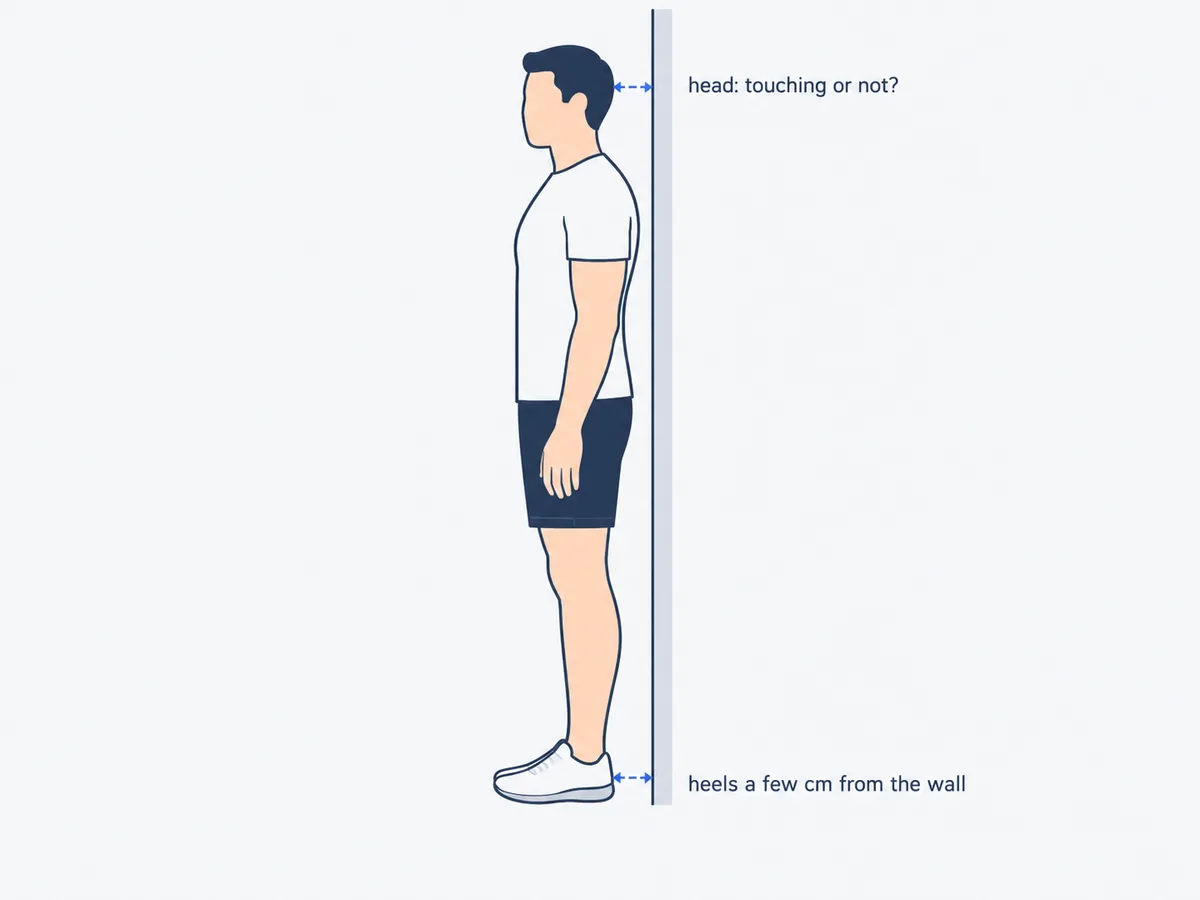
The result depends on the shape of your back, buttocks and shoulders as well as your posture, so two people with similar head positions can feel very different at the wall. Whether your head or shoulders touch the wall is not a pass or fail result, and we give no "normal" distance from the wall because we found no published source for one. Do not force your head back if it is uncomfortable.
What good posture feels like, and what a photo shows
Good posture is hard to judge by feel, partly because there is no single agreed shape for it. In a 2019 survey of 544 Greek physiotherapists (Korakakis and colleagues), the respondents spread their choice of an "optimal" posture across three sitting and two standing options. The most common choices were variations of upright sitting with a curve in the lower back, and the authors point out the lack of strong evidence that any specific posture leads to better health.
What feels like good posture is also rarely the posture you spend the day in. When 100 adults without symptoms were asked to sit in an "optimal" posture (Korakakis and colleagues, 2021), they consistently sat more upright than they normally do, and none of them said their usual sitting posture was optimal. Standing works the same way: in a 2021 study of 66 physical therapists and physical therapy students photographed over a video call, the neck angle researchers measured changed by about five degrees on average when people were asked to take their best posture instead of standing relaxed.
A photo records where your head, shoulders and hips were at one moment, whatever that felt like. It does not show whether a position is comfortable, how long you hold it or how you move. A photo of your usual stance is therefore the better reference to compare over time, and how a position feels is separate information worth telling a professional.
Front and side photos you review yourself
Prop your phone upright and level at waist to chest height, 2.5 to 3 metres away (our suggestion within the 1.9 to 3 m that published studies used), and take one front and one side photo in fitted clothing, standing the way you usually stand. Our guide on how to take front and side posture photos covers each step and the research behind it.
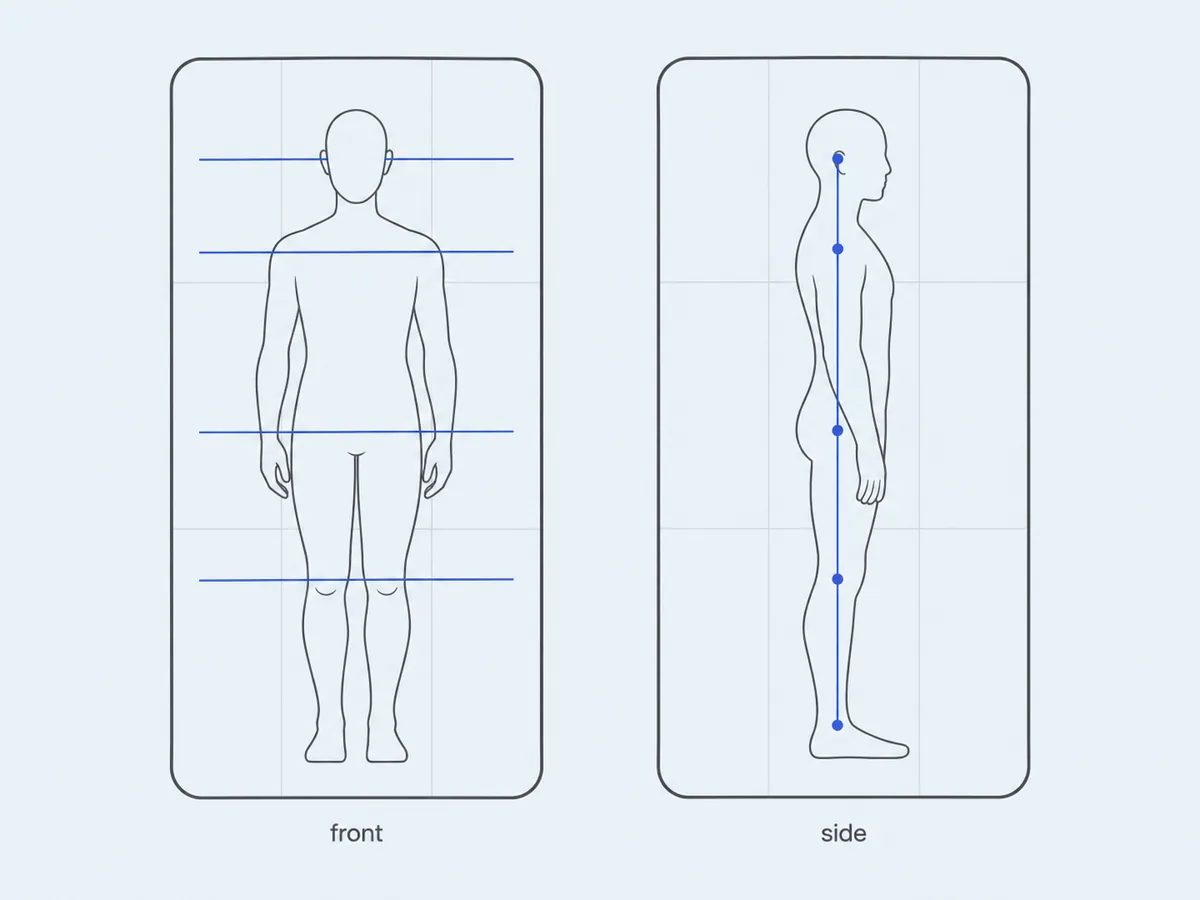
To review the photos, turn on the grid in your photo editor or draw straight lines over the image, then look at a few points.
- Front photo: compare the height of your left and right ear, shoulder, hip and knee. Check whether your head tilts to one side and whether your kneecaps point forward.
- Side photo: look at where your ear sits relative to your shoulder, your shoulder relative to your hip, and your hip relative to your knee and ankle.
Expect your judgement to vary. The authors of the SAPO posture software study note that judging posture by eye has low reliability, both for one examiner on different days and between examiners, which is why clinics and researchers measure angles on the photo instead.
A posture app that measures the photos
A posture app estimates body landmarks and calculates angles and left-right differences from the photos. It gives you a structured record, but that alone does not establish its accuracy or reliability. In PoseAlign, a free posture analysis app for Android with no subscription and no in-app purchases, you add the two photos under Advanced check and tap Generate report; the how it works page shows each screen.
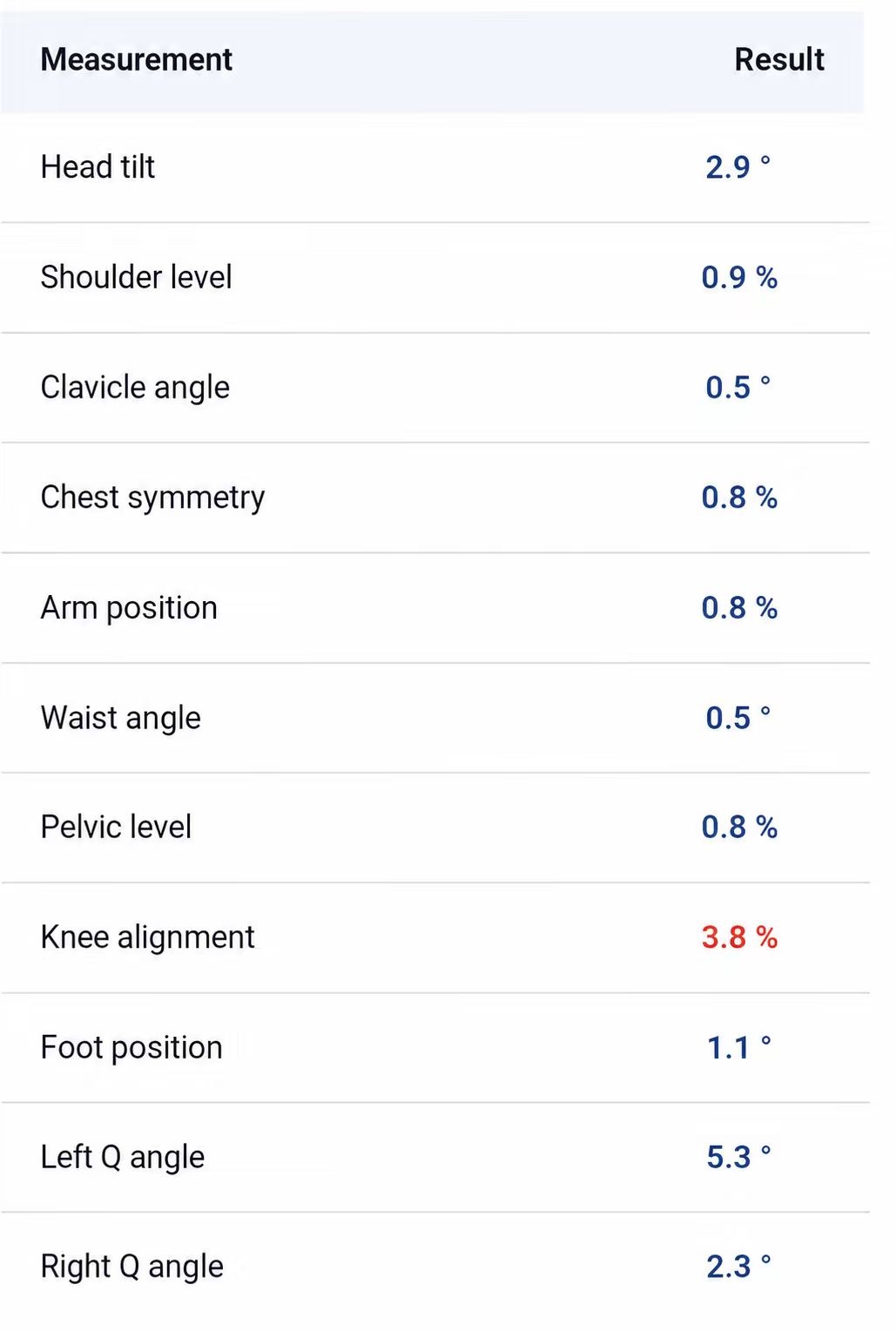
The report lists 11 front-view and 2 side-view measurements in degrees or percent; how to read a posture analysis report explains what each one describes. PoseAlign is Android only. Other apps, such as APECS and PostureScreen, have published reliability studies, and our guide on choosing a free posture analysis app for Android compares what each offers.
Check your sitting posture too
Standing photos describe only one position, and many people spend more of the day sitting or looking at a phone.
- A 2024 study of 98 young adults measured a smaller craniovertebral angle (the head sitting further forward) when they were sitting than when they were standing.
- In a 2018 study of a posture app with 20 young adults, several head and shoulder measurements differed when participants texted or made a phone call compared with standing still.
To look at this yourself, ask someone to take a side photo while you work at your desk or use your phone as you normally do, and compare it with your standing side photo. PoseAlign's report is built around one front and one side full-body photo, so the seated photo is for your own comparison.
Repeat the check the same way
One check is a snapshot, and posture varies from day to day. To follow changes, repeat the photos with the same setup and keep every result; our monthly routine for tracking posture changes shows what to record and how to compare reports.
When to see a professional
A home check is for awareness. A photo that looks uneven is not by itself a sign of a problem: a 2020 review of 41 systematic reviews (Swain and colleagues) found no consensus that specific spine postures cause low back pain. See a doctor or physiotherapist if something hurts or worries you. The NHS advises seeing a GP for neck pain when:
- pain or stiffness does not go away after a few weeks
- painkillers have not worked
- you are worried about the pain
- you also have symptoms such as pins and needles or a cold arm
For back pain, the NHS also lists unexplained weight loss, a lump or swelling in your back or a change in its shape, and pain that does not improve with rest or is worse at night as reasons to see a GP. It advises asking for an urgent GP appointment or calling 111 if you also feel hot, shivery or generally unwell, or the pain is severe and starts suddenly or gets worse quickly. It advises calling 999 or going to A&E for symptoms such as pain, tingling, weakness or numbness in both legs, loss of feeling around the genitals or anus, changes in your bladder or bowels, or pain that started after a serious accident.
A physiotherapist can also help if you simply want an expert opinion on your posture. Our guide on what to send a physio or trainer with your posture photos explains what to include.
Your first check
- Do the wall check once to notice where your head and shoulders usually sit.
- Set up and take the front and side photos with the posture photo guide.
- Review them by eye against straight lines, or run them through a posture app and read the numbers with the report guide.
- Save the photos or report with the date, so your next check has something to compare with.