
BLOG
PostureScreen alternatives for Android: what the Android version lacks and what free apps include
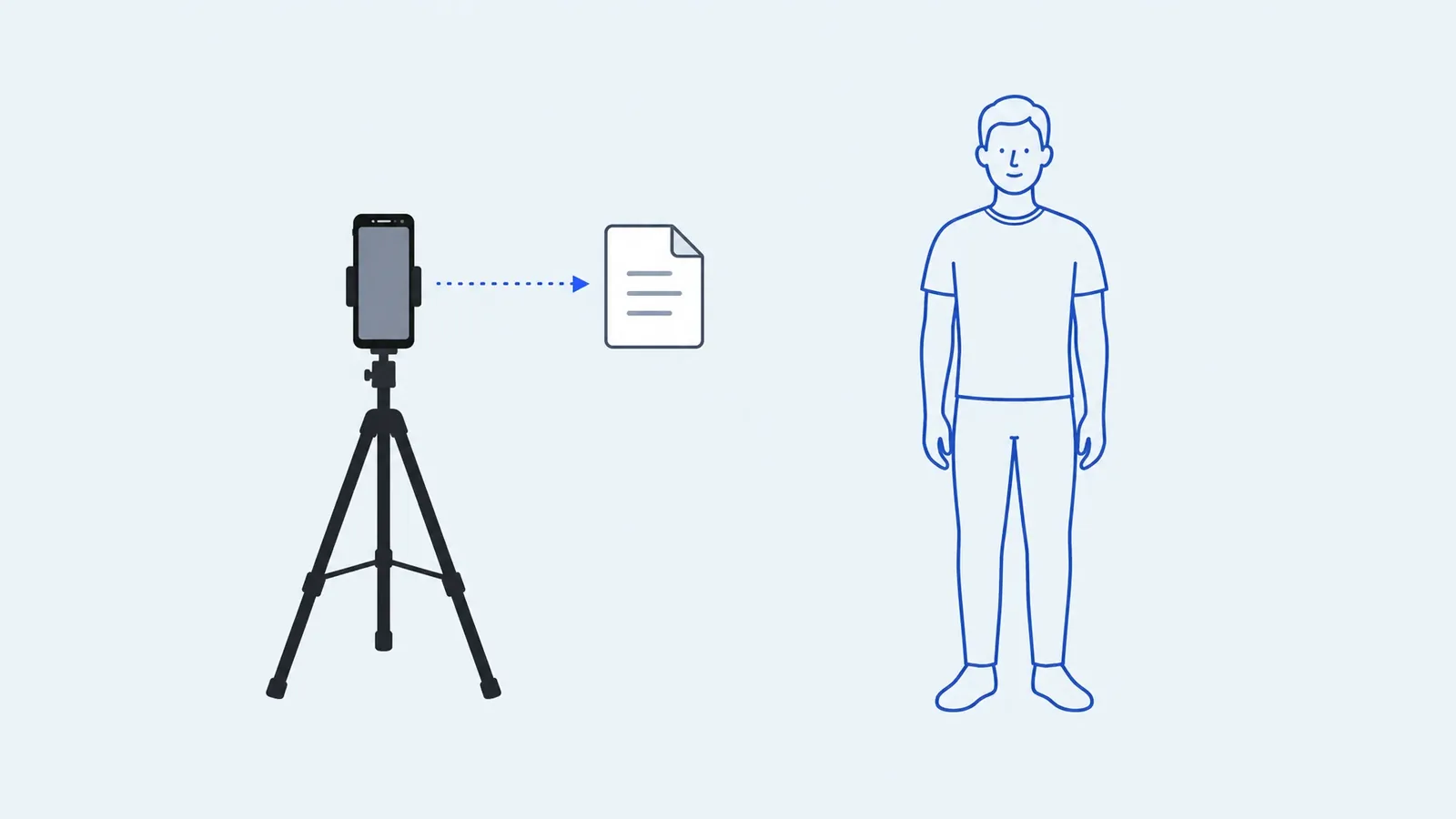
On Android, PostureScreen is a smaller product than on iOS: PostureScreen Lite costs $19.99 with 30 days of unlimited use, then $9.99 a month or $99 a year, and it has no computer vision, range of motion or movement screens. The published PostureScreen studies tested the iOS app on an iPad. Four free-to-install Android apps also export a PDF report, and this guide compares what each free version includes, as of 8 October 2026.
PostureScreen on Android and on iOS
PostureScreen's developer, PostureCo, sells two separate apps. Prices come from the PostureScreen pricing page; features from the PostureScreen Lite listing on Google Play and the PostureScreen Mobile listing on the App Store.
| Android: PostureScreen Lite | iOS: PostureScreen Mobile | |
|---|---|---|
| Upfront price | $19.99, includes 30 days of unlimited use | $59.99, includes 30 days of unlimited use |
| After 30 days | $9.99/month or $99/year | $24.99/month or $249/year |
| First 12 months (our estimate) | $118.99 on the yearly plan, $129.88 on monthly | $308.99 on the yearly plan, $334.88 on monthly |
| Landmarks | "Posture assessment without computer vision" | "Markerless AI-assisted digitization", with points you place or confirm |
| Views | 2-view and 4-view assessments, lateral-only screening | 2-view and 4-view reports in mm and degrees |
| Extra modules | None of the iOS modules | Range of motion, SquatScreen and push-up screens, LeanScreen body composition, RemoteScreen, EHR integrations |
| PDF reports | Report PDFs while on a subscription | Clinician and patient-friendly PDFs |
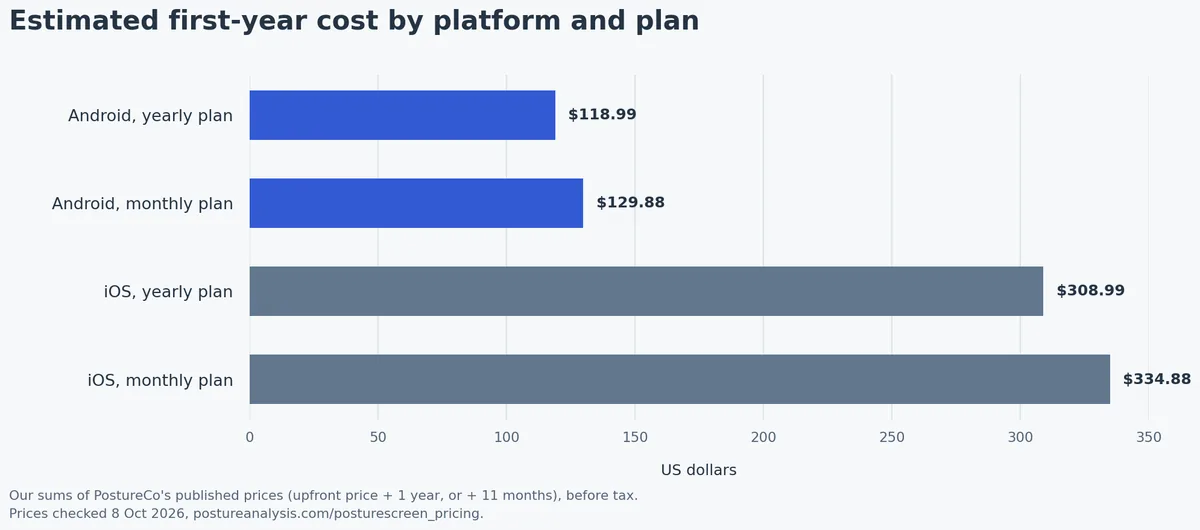
The Lite listing says the Android version "is not compatible with our iOS version" and has a much more limited feature set. The 12-month figures are our own sums of the published prices (upfront price plus one year, or plus 11 months), before tax. iOS add-ons such as Cloud Services (from $9.99 a month) and PostureScribe.AI ($49.99 a month, US only) cost extra.
What the PostureScreen studies tested
The research behind PostureScreen comes from the iOS app, and none of it tested the Android version. The Lite listing on Google Play still quotes the conclusion of the 2018 study below.
- Boland et al. (2016) used PostureScreen Mobile on an iPad with 10 young adults (mean age 21) and three examiners. Agreement between examiners on the calculated posture measures was substantial or almost perfect, and better when participants wore minimal clothing.
- Szucs and Donoso Brown (2018) used the iPad app with reflective skin markers on 20 healthy volunteers (mean age 21). They reported strong rater reliability and "preliminary evidence of construct validity".
- Hopkins et al. (2019) compared the iOS app with a VICON 3D motion capture system in 50 men without symptoms (mean age 24). Most measures were biased compared with VICON; only head shift was comparable.
For an Android buyer, that means the reliability evidence describes a different app with a different landmark method. Our guide to how accurate photo posture analysis is puts these studies next to the wider research.
Free Android apps that export a PDF report
A client-ready report is PostureScreen's main output, so this table covers the free-to-install Android photo posture apps whose listing or official site says they export a PDF. PoseAlign is our app. The guide to choosing a free posture analysis app for Android covers the wider set, including apps without a PDF.
| App | Price model | Platforms | Views | Landmarks | Published studies | Made for | |
|---|---|---|---|---|---|---|---|
| PoseAlign | Free; no subscription or in-app purchases | Android | 1 front + 1 side | Placed automatically | Yes, free | No validation identified in the cited sources | Individuals |
| APECS | Free plan; Pro €4.79/month, Pro Plus €5.99/month | Android, iOS | Front, back, both sides; video on Pro Plus | Auto-position, manual or green markers | Basic results summary free; advanced PDF reports on Pro | Yes (developer cites 35+) | Practitioners, researchers |
| PhysioCode Postural Assessment | Free version; paid Extended and Professional plans | Android | Front, back, sides, free view; video protocols | Points you place on anatomical landmarks | Yes, with your logo | None named on the listing | Practitioners with client lists |
| Posture Screen: Spine Analysis | Free; no in-app purchases listed | Android | Front, back, left, right | Not described | Yes | None named on the listing | Practitioners |
No free app on this list reproduces PostureScreen iOS. The closest in scope is APECS, and only its paid tiers add the deeper modules. "Android" alone means we did not find the app on the US App Store.
Who each app suits, and who it does not
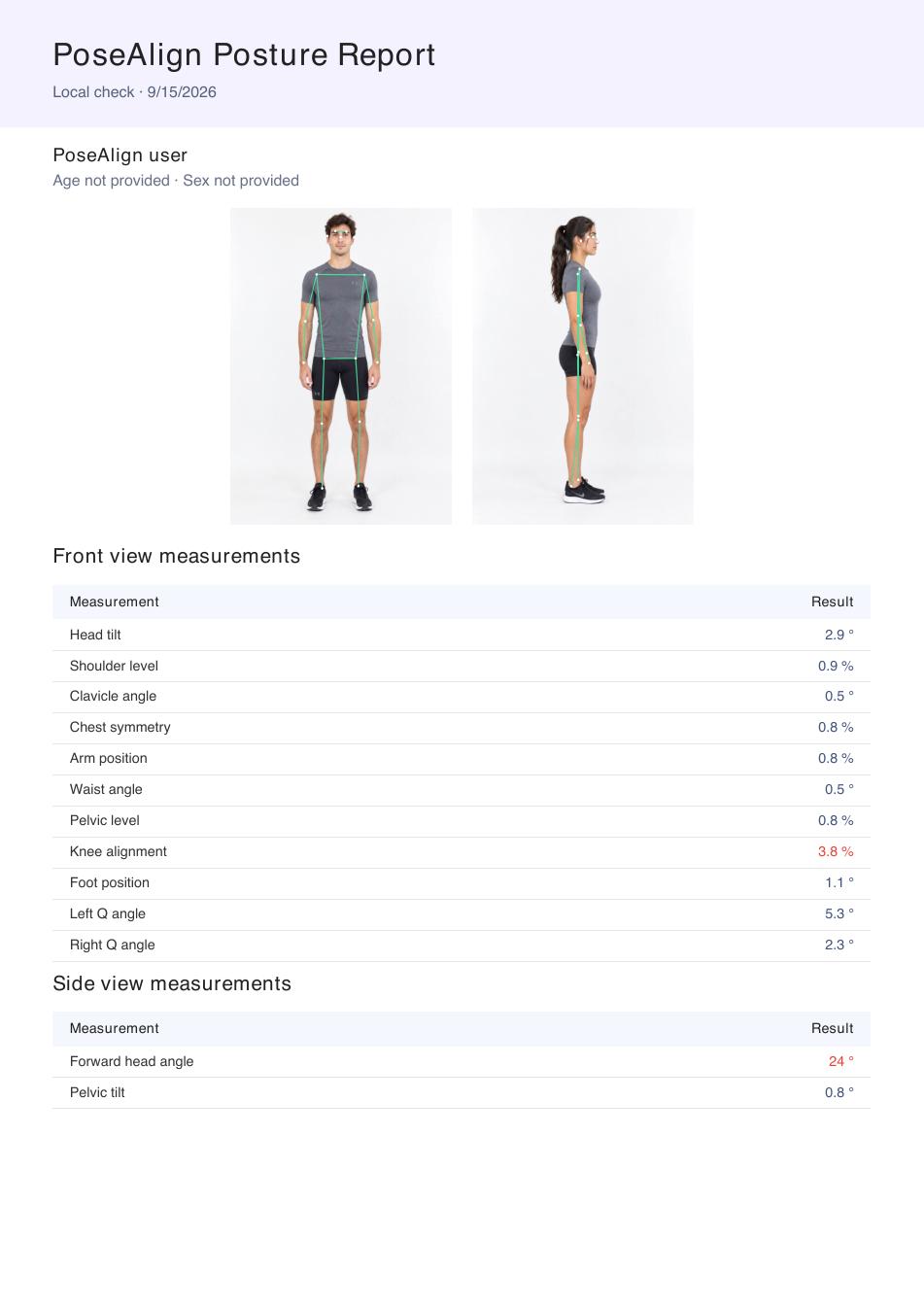
- PoseAlign suits a person checking their own standing posture: two photos, 13 fixed measurements (11 front, 2 side) in degrees or percent, and a free PDF. Its documented workflow covers still photos and measurements in degrees or percent; the cited sources do not establish clinical validity, and its formulas are not published. A clinical assessment needs more than this report. The posture report page shows what the PDF contains.
- APECS suits practitioners who want back views, range of motion, manual landmark control and published research, on Android or iOS (APECS plans). Head-neck analysis, trunk symmetry and advanced PDF reports need Pro. Our PoseAlign vs APECS comparison goes through the differences.
- PhysioCode suits clinicians who want client profiles, comparisons between photos and branded PDFs. Its listing describes a "Fully operational Free Version" but does not say which features stay free, and it stores assessments in the cloud.
- Posture Screen: Spine Analysis, from Health You Up, is not related to PostureScreen despite the name. Its listing says "No subscriptions" and offers a full PDF report from four views. Google Play shows its last update as 26 December 2023, so try it on your device before you rely on it.
What you give up by leaving PostureScreen
On iOS, leaving means losing range of motion, movement screens, body composition, remote assessments and EHR links; APECS and PhysioCode cover part of this, PoseAlign none of it. On Android, PostureScreen Lite already lacks those modules, so the trade is mainly the PostureScreen report format and its 2-view and 4-view workflow against a free plan. In both cases, the published reliability studies stay with the iOS app.
How to decide
- If you are a clinician on an iPhone or iPad who needs documentation and modules, stay with PostureScreen Mobile or compare it with APECS Pro.
- If you are a practitioner on Android, try the APECS free plan and the PhysioCode free version with your own clients' photos, then pay only for the modules you use.
- If you are checking your own posture on Android, a free app with a PDF covers the job; take the photos with the same setup each time, as in our guide to taking posture photos.
Whichever app you choose, a photo-based result is an estimate, not a diagnosis. If you plan to show it to someone, see how to share a posture report with a physio or trainer.
How this guide was made
We included Android apps on Google Play that analyze posture from still photos (not reminder, wearable or exercise-only apps) and are free to install, found through a Google Play search for "posture analysis" and the first page of Google results for "posturescreen alternative android", checked on 8 October 2026, plus PoseAlign, our app. From those, this page lists the apps whose store listing or official site says they export a PDF report. Facts come from each app's Google Play listing, the US App Store and the developers' sites, and prices are from the US stores or the developer's site. We did not run accuracy tests on any app.